

Elevator Control Systems Explained: From Relay Logic to Microprocessors & AI
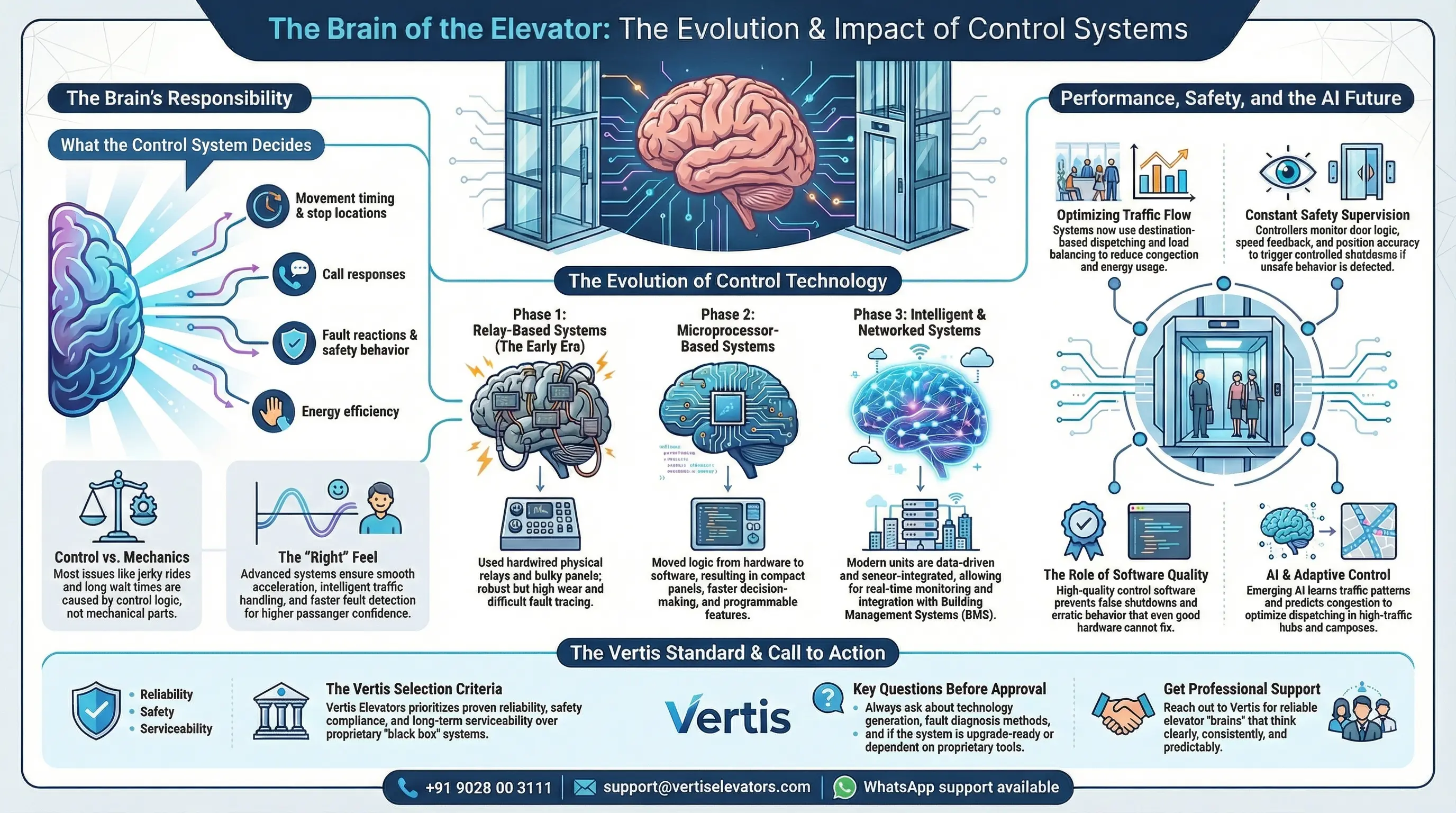
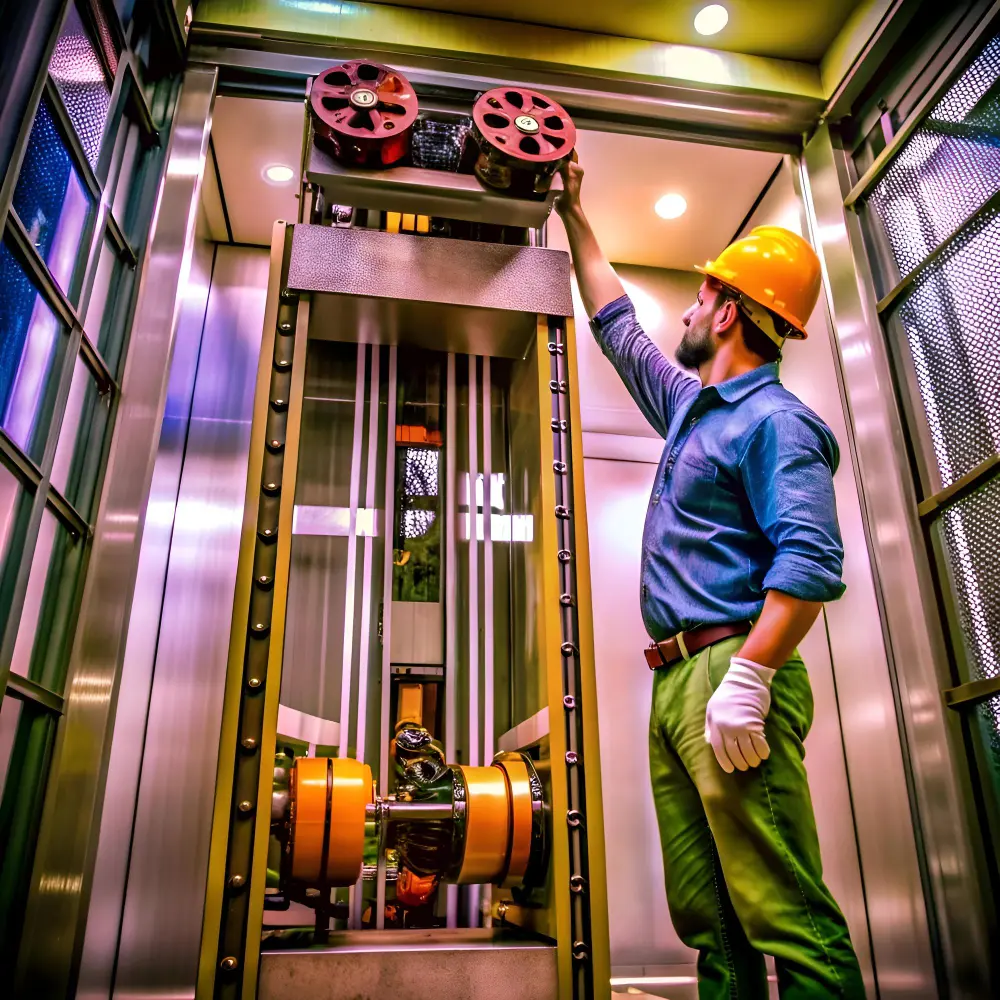
If an elevator is the body, the control system is the brain.
It decides:
- When the elevator moves
- Where it stops
- How it responds to calls
- How it reacts to faults
- How safely it behaves in abnormal conditions
Yet, control systems are one of the least understood aspects of elevators—often reduced to vague terms like “panel” or “controller.”
In reality, the evolution of elevator control systems has quietly transformed safety, efficiency, ride comfort, and reliability.
Why Elevator Control Systems Matter More Than People Realize?
Most elevator complaints—jerky rides, long waiting times, frequent shutdowns—are control-related, not mechanical.
A modern control system ensures:
- Smooth acceleration and deceleration
- Intelligent traffic handling
- Faster fault detection
- Better energy optimization
- Higher passenger confidence
Simply put, a well-designed control system makes an elevator feel “right.”
Phase 1: Relay-Based Control Systems (The Early Era)
Older elevators used electromechanical relay logic.
How they worked:
- Physical relays opened and closed circuits
- Logic was hardwired
- Each function required dedicated components
Limitations:
- Bulky panels
- High wear and tear
- Difficult fault tracing
- Limited flexibility
- Slower response times
While robust for their time, relay-based systems struggle to meet modern safety and performance expectations.
Phase 2: Microprocessor-Based Control Systems
The introduction of microprocessors was a major leap forward.
What changed?
- Logic moved from hardware to software
- Compact controller panels
- Faster decision-making
- Easier diagnostics
Benefits:
- Improved reliability
- Better traffic management
- Programmable features
- Easier upgrades
This generation laid the foundation for today’s intelligent elevators.
Phase 3: Intelligent & Networked Control Systems
Modern elevator controllers are no longer standalone units.
They are:
- Networked
- Data-driven
- Sensor-integrated
- Software-configurable
Key capabilities:
- Real-time monitoring
- Error trend analysis
- Remote diagnostics
- Group control optimization
- Integration with building management systems (BMS)
This is where elevators begin to behave like smart infrastructure, not isolated machines.
How Modern Control Systems Improve Traffic Flow?
In multi-elevator buildings, control systems manage:
- Peak-hour traffic
- Directional grouping
- Load balancing
- Destination-based dispatching
Instead of responding blindly to button presses, the system predicts movement patterns and optimizes car assignments.
The result:
- Shorter waiting times
- Reduced congestion
- Lower energy usage
- Improved user experience
Safety: Where Control Systems Play a Critical Role
Modern controllers constantly monitor:
- Door operation logic
- Speed and braking feedback
- Position accuracy
- Emergency inputs
- Fault interlocks
If unsafe behavior is detected, the system:
- Triggers controlled shutdowns
- Prevents further operation
- Logs fault data for investigation
This continuous supervision is a major reason why modern elevators are safer than ever.
The Role of Software Quality (Often Overlooked)
Two elevators can use similar hardware, but behave very differently.
Why?
Because control logic and software quality matter.
Poorly written control software can cause:
- False shutdowns
- Erratic behavior
- Passenger discomfort
- Difficult fault diagnosis
Reliable elevators require not just components, but stable, well-tested control logic.
AI and Adaptive Control: What’s Emerging Now?
Artificial intelligence is beginning to influence elevator control systems through:
- Learning traffic patterns
- Predicting congestion
- Optimizing dispatch strategies over time
While still evolving, AI-assisted control is already improving efficiency in:
- High-traffic commercial buildings
- Transport hubs
- Large campuses
The goal is not automation for its own sake, but better decision-making.
Why Control System Selection Is a Long-Term Decision?
Control systems affect:
- Ease of maintenance
- Spare availability
- Upgrade flexibility
- Compatibility with future technologies
Choosing a reliable, open, and well-supported control platform reduces the risk of vendor lock-in and premature obsolescence.
The Vertis View on Elevator Control Systems
At Vertis Elevators, control systems are selected based on:
- Proven reliability
- Safety compliance
- Serviceability
- Long-term support availability
Controllers are not treated as black boxes, but as critical safety and performance assets.
An elevator should think clearly, consistently, and predictably.
Before Approving an Elevator Control System, Ask This
- What generation of control technology is being used?
- How are faults logged and diagnosed?
- Is the system upgrade-ready?
- How dependent is it on proprietary tools?
Informed questions today protect operational stability tomorrow.
Call: +91 9028 00 3111 | WhatsApp Support Available
Email: support@vertiselevators.com
Related Post

Safety Can’t Wait.
Book a free safety audit with Vertis Elevators and ensure your building meets every standard - protecting people and your reputation.
Leave a Comment



Comments (0)
No comments available.