

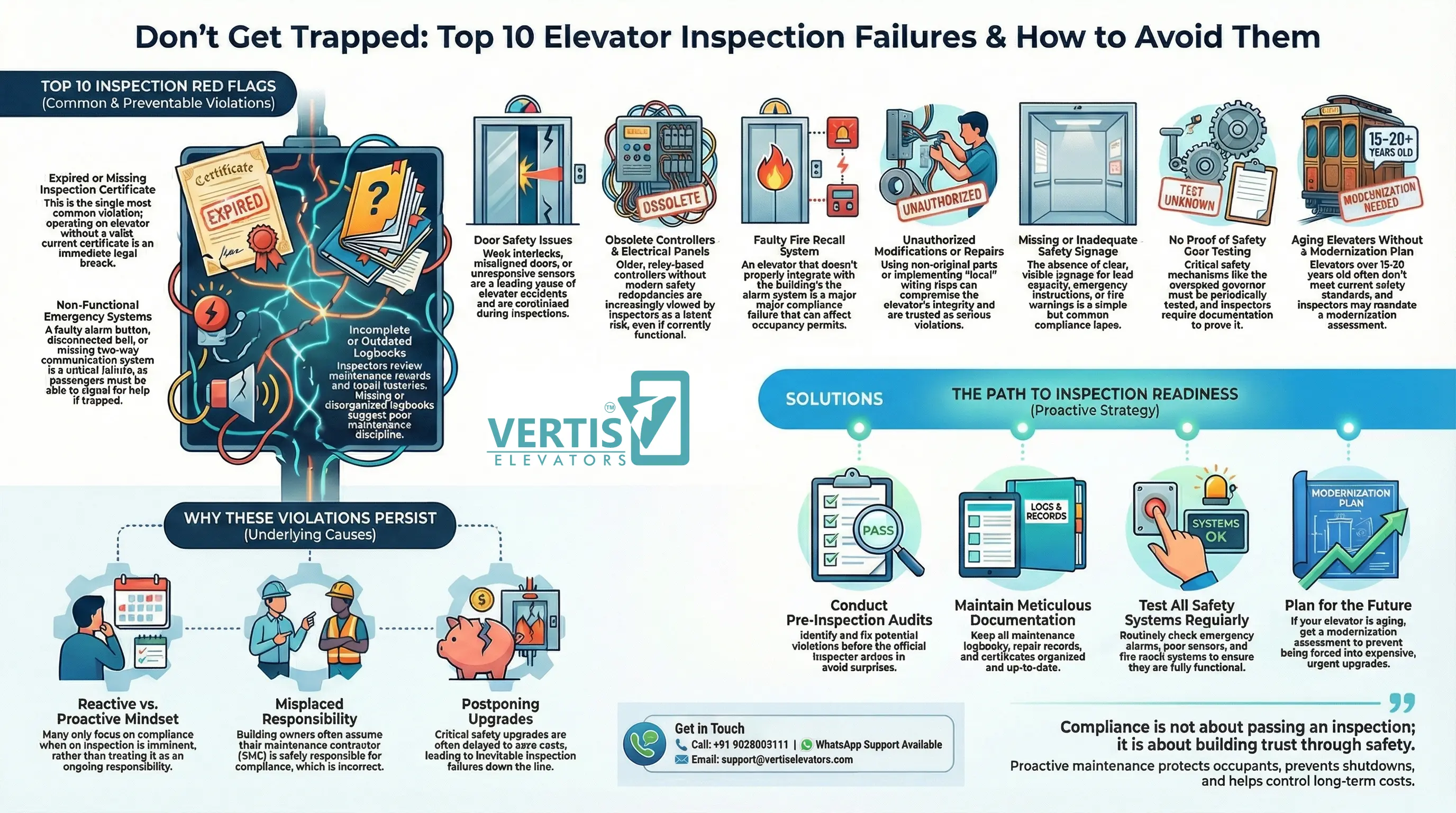
Common Elevator Safety Violations Found During Inspections (And How to Avoid Them)
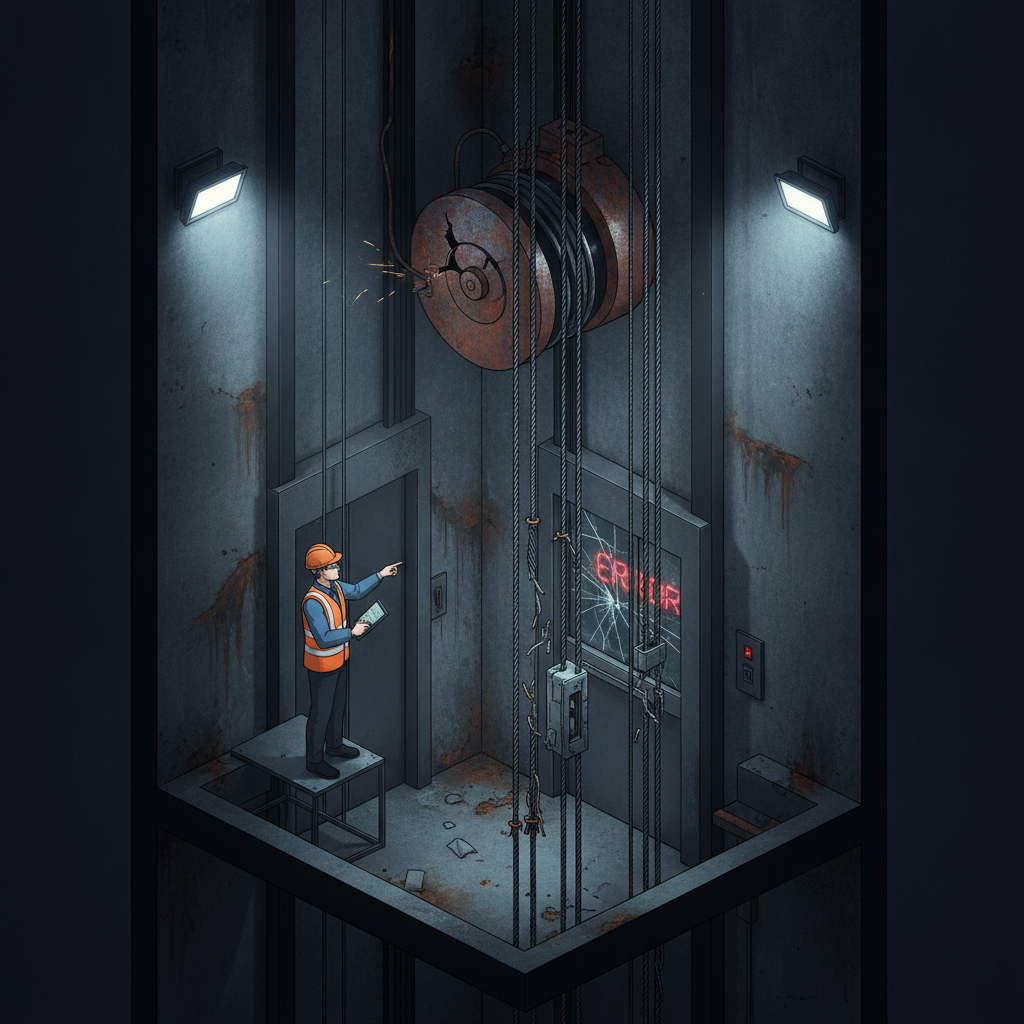
Elevator inspections rarely fail due to dramatic faults.
In most cases, inspections fail due to small, accumulated safety violations. Many of which building owners are not even aware of.
Across residential societies, hospitals, malls, and factories, lift inspectors repeatedly flag the same issues. Understanding these common violations can help you prevent shutdowns, penalties, and emergency repairs; before they disrupt operations or endanger lives.
Why Inspections Fail More Often Than Expected
In Maharashtra, elevator inspections are carried out under the Bombay Lifts Act, and inspectors assess elevators not just for operation, but for compliance with current safety expectations.
Many buildings assume:
“The lift is running fine, so it must be compliant.”
Unfortunately, that assumption leads to most inspection failures.
1. Expired or Missing Lift Inspection Certificate
This is the single most common violation.
- Inspection certificates have a defined validity period
- Many societies forget renewal dates
- Some buildings operate lifts for months without valid certification
Why inspectors flag this:
Operating an elevator without a valid certificate is a direct legal violation, regardless of maintenance status.
Not sure if your lift certificate is valid? A quick compliance check can prevent surprise shutdowns.
2. Non-Functional Emergency Alarm or Communication System
Emergency alarms are mandatory safety devices, not optional features.
Common issues:
- Alarm button not working
- Bell disconnected
- No two-way communication system in modern buildings
Why this matters?
In case of entrapment, passengers must be able to signal for help immediately.
In healthcare environments, emergency communication failures are unacceptable. Periodic testing is critical.
3. Incomplete or Outdated Maintenance Logbooks
Inspectors often ask for:
- Maintenance records
- Breakdown history
- Repair documentation
Violations occur when:
- Logbooks are not updated
- Records are missing
- AMC details are unclear
This raises red flags about maintenance discipline; even if the lift appears functional.
4. Door Safety Issues (Interlocks, Sensors, Alignment)
Door-related issues are a frequent cause of inspection remarks.
Typical findings include:
- Weak or bypassed door interlocks
- Misaligned landing doors
- Sensors not responding consistently
Why inspectors take this seriously:
Door failures are among the leading causes of elevator accidents.
High-traffic lifts experience faster wear. Door safety should be audited more frequently.
5. Obsolete Controllers and Electrical Panels
Older elevators often run on:
- Outdated relay-based controllers
- Panels without redundancy
- Components no longer supported by manufacturers
Inspectors increasingly view this as a latent safety risk, even if the lift works today.
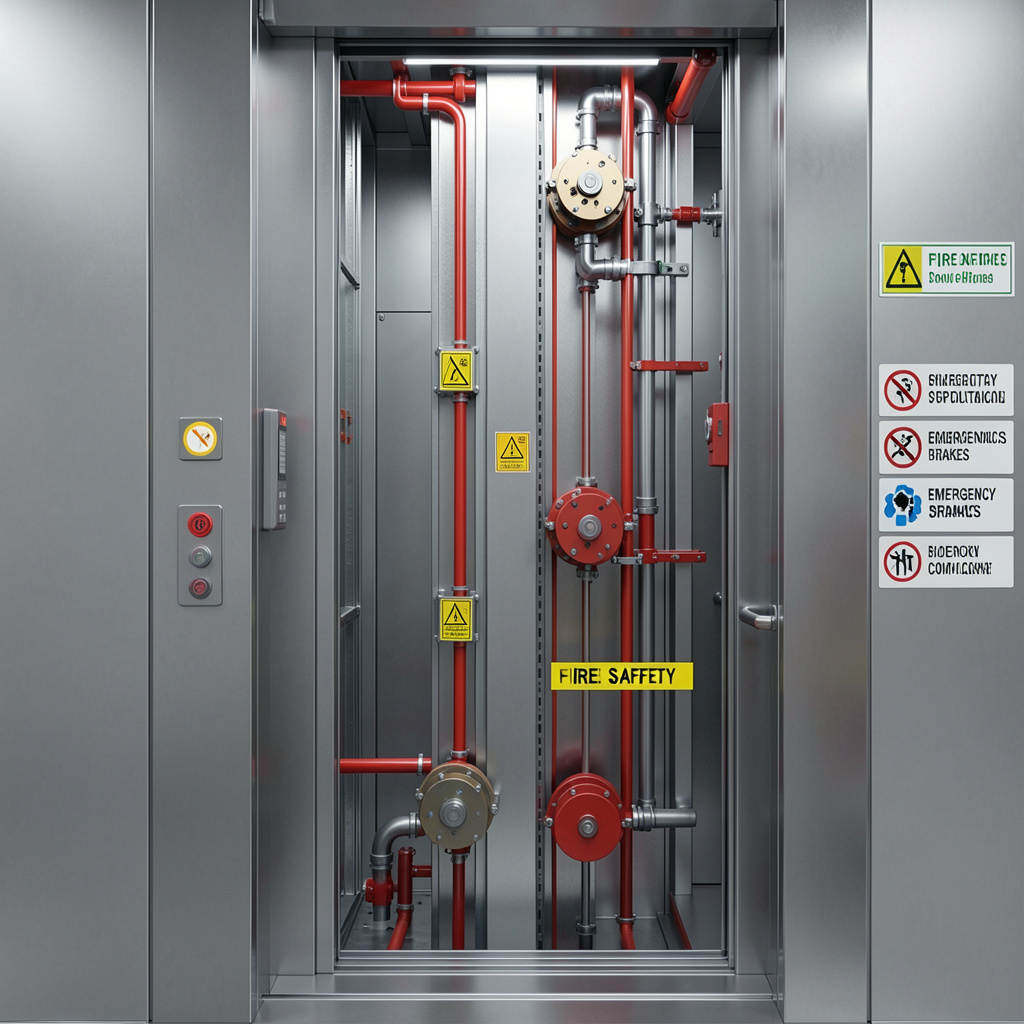
6. Fire Recall System Not Integrated or Disabled
In many buildings:
- Fire recall is installed but not functional
- Fire alarm integration is incomplete
- Manual overrides are missing
This is a major compliance issue, especially for:
- Hospitals
- Malls
- High-rise buildings
Fire compliance failures can affect occupancy approvals and Fire NOCs. Integration must be tested, not assumed.
7. Unauthorized Modifications or Local Repairs
Common examples:
- Non-OEM spare parts
- Local wiring changes
- Temporary fixes made permanent
While these may reduce short-term costs, inspectors treat them as serious violations because they compromise system integrity.
8. Missing or Inadequate Safety Signage
Simple things matter:
- Load capacity signage
- Emergency instructions
- Do-not-use-during-fire notices
Absence or fading of signage is often recorded as a compliance lapse.
9. Lack of Overspeed Governor or Safety Gear Testing
Safety mechanisms must be:
- Present
- Tested periodically
- Properly documented
Failure to demonstrate recent testing can lead to conditional approval or rejection.
10. Aging Elevators Without Modernization Assessment
Elevators older than 15–20 years often fail inspections due to:
- Non-alignment with current BIS standards
- Inability to support new safety requirements
Inspectors may recommend (or insist) on modernization, even if no immediate fault is visible.
If your elevator is aging, a modernization assessment can prevent forced upgrades later.
Why These Violations Persist
Most violations occur because:
- Compliance reviews are reactive, not proactive
- Responsibility is assumed to be with the AMC alone
- Safety upgrades are postponed until failure
Unfortunately, inspections reward only readiness, not intentions.
How Vertis Elevators Helps Buildings Stay Inspection-Ready
At Vertis Elevators, we help clients avoid last-minute panic by offering:
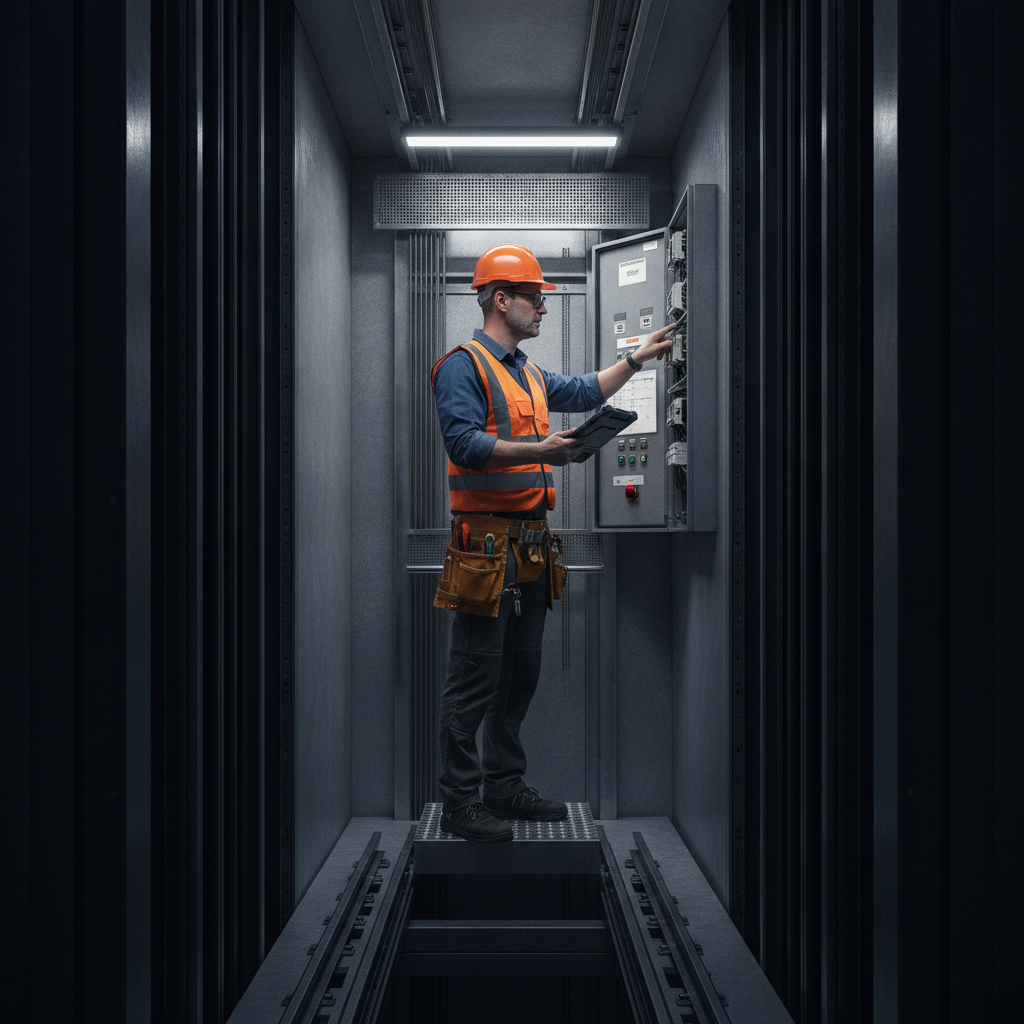
- Pre-inspection safety audits
- Documentation and logbook reviews
- Fire recall and safety system checks
- Modernization feasibility assessments
- Compliance-aligned maintenance practices
Our goal is simple: no surprises on inspection day.
Final Thought
Most elevator inspection failures are preventable.
By understanding common violations and addressing them early, building owners can:
- Avoid shutdowns
- Protect occupants
- Control costs
- Maintain regulatory confidence
Compliance is not about passing inspections; it is about building trust through safety.
???? Call: +91 9028 zero zero 3111 | ???? WhatsApp Support Available
???? Email: support@vertiselevators.com
Related Post
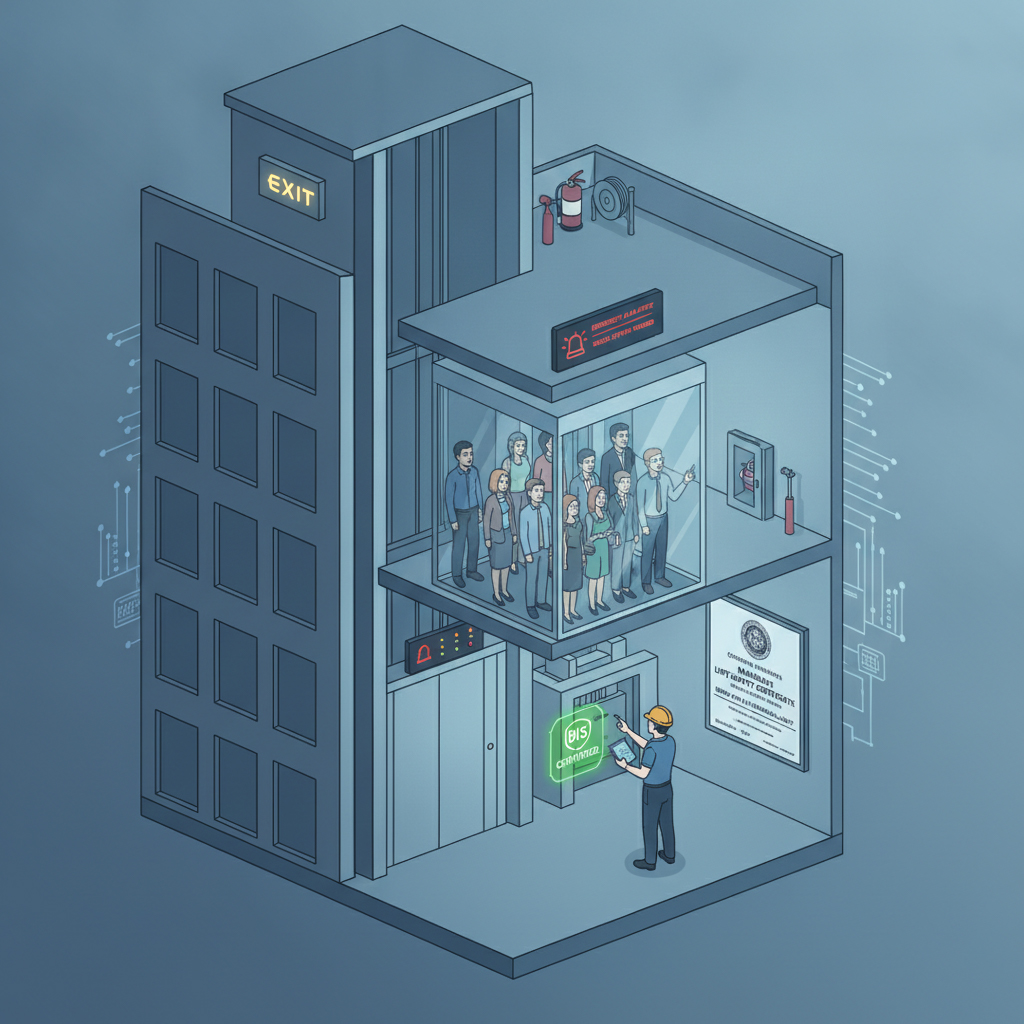

Safety Can’t Wait.
Book a free safety audit with Vertis Elevators and ensure your building meets every standard - protecting people and your reputation.
Leave a Comment



Comments (0)
No comments available.