

Indian Elevator Safety Regulations Explained: BIS, Fire & Local Compliance
Elevators are among the most critical safety systems in any building. Yet, for many building owners, facility managers, and housing societies, elevator regulations in India remain confusing, fragmented, and often misunderstood.
This lack of clarity can lead to serious consequences like, failed inspections, penalties, operational shutdowns, or worse, safety incidents.
In this guide, we break down Indian elevator safety regulations in simple, practical terms. What applies, who enforces it, and what you, as a building stakeholder, are responsible for, etc.
Why Elevator Compliance Is Non-Negotiable?
Elevator safety is governed not just by best practices, but by legal responsibility.
If an accident occurs due to non-compliance:
- Liability can fall on the building owner or society
- Insurance claims may be rejected
- Authorities may issue stop-use orders
- Legal action and reputational damage can follow
Compliance is not about paperwork; it is about protecting people, property, and long-term operational continuity.
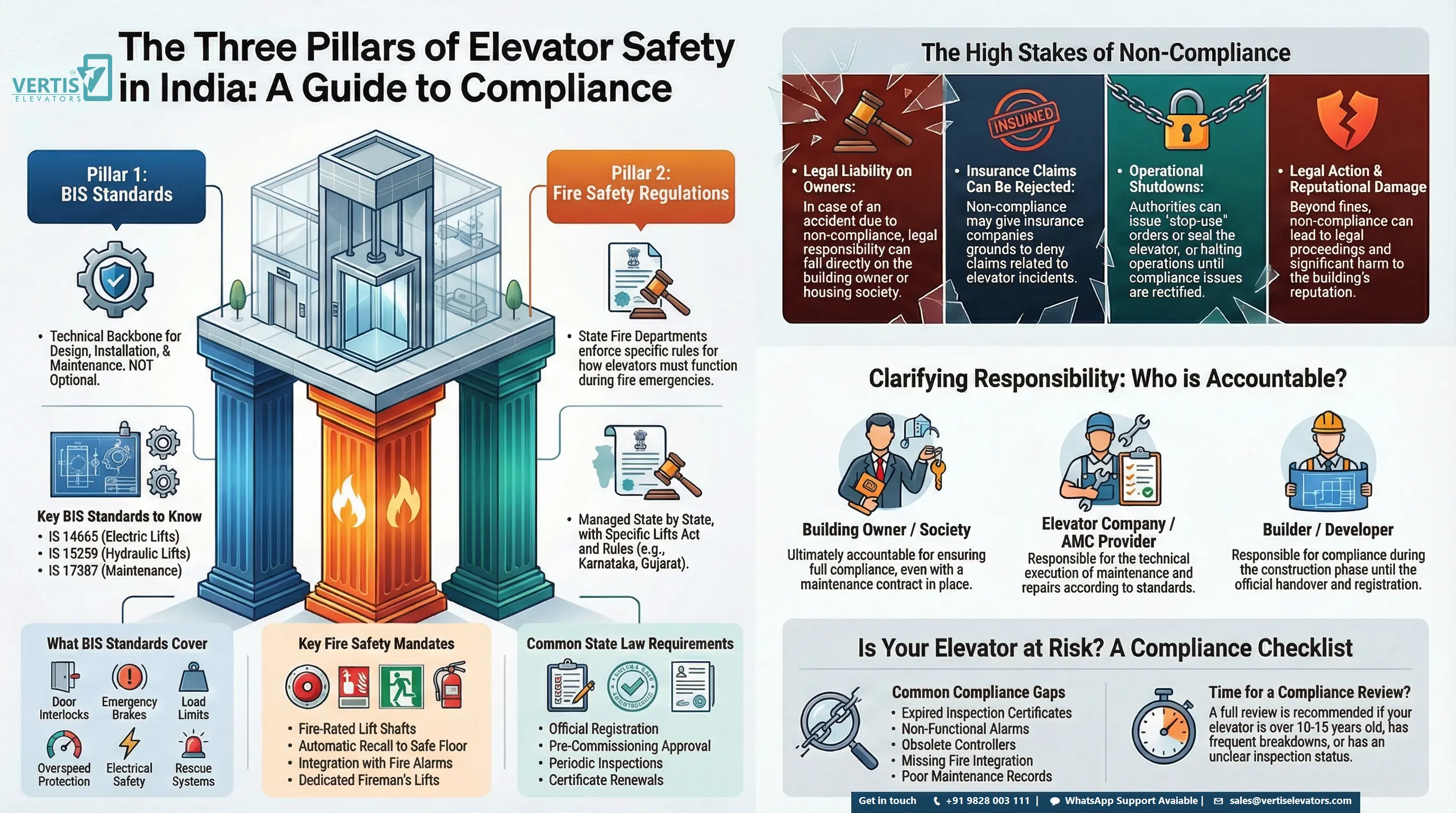
The Three Pillars of Elevator Safety Compliance in India
Elevator compliance in India broadly falls under three overlapping regulatory layers:
- BIS Standards (Technical & Safety Benchmarks)
- Fire Safety Regulations
- State-Level Elevator Acts & Local Authority Rules
Understanding how these work together is essential.
1. BIS Standards: The Technical Backbone of Elevator Safety
The Bureau of Indian Standards (BIS) defines how elevators must be designed, installed, and maintained to ensure safety.
Key BIS standards commonly applicable include:
- IS 14665 – Electric traction lifts
- IS 15259 – Hydraulic lifts
- IS 15330 – Escalators and moving walks
- IS 17387 – Lift installation, operation, and maintenance (recent updates)
These standards cover:
- Door safety and interlocks
- Emergency braking systems
- Load limits and overspeed protection
- Electrical safety
- Rescue and alarm systems
Important to note:
BIS standards are not optional guidelines. They are the reference framework used by inspectors, fire authorities, and courts to assess compliance.
2. Fire Safety Regulations: Elevators in Emergency Scenarios
Fire safety rules impact elevators more than most people realize.
Fire authorities (State Fire Departments) typically mandate:
- Fire-rated lift shafts and doors
- Automatic recall of lifts to designated floors during fire
- Integration with fire alarm systems
- Dedicated fireman’s lift for certain high-rise or commercial buildings
- Prohibition of passenger lift use during fire emergencies
In hospitals, malls, and high-rise buildings, fire compliance is often audited separately, and non-compliant elevators can delay building occupancy approvals.
3. State Elevator Acts & Local Authority Compliance
In India, elevators are regulated state-wise, not centrally.
For example:
- Maharashtra has the Bombay Lifts Act, 1939 and Bombay Lifts Rules, 1958
- Karnataka, Gujarat, Tamil Nadu, and others have their own Elevator Acts
These laws typically require:
- Registration of every elevator
- Approval before commissioning
- Periodic inspections by the Lift Inspector
- Renewal certificates
- Reporting of major repairs or modernization
Failure to comply can result in:
- Seal orders
- Heavy penalties
- Mandatory shutdown until rectified
Who Is Responsible for Compliance?
This is one of the most misunderstood areas.
Responsibility is shared, but not equal.
- Building Owner / Society
- Legal owner of the elevator
- Ultimately accountable for compliance
- Elevator Company / AMC Provider
- Responsible for technical execution and maintenance
- Builder / Developer (during construction phase)
- Responsible until handover and registration
After handover, the owner or society cannot shift responsibility, even if an AMC is in place.
Common Compliance Gaps We See in Real Buildings
Based on Vertis Engineer’s field experience, common issues include:
- Expired inspection certificates
- Non-functional emergency alarms
- Obsolete controllers without safety redundancy
- Fire integration missing or disabled
- Maintenance records not updated
- Unauthorized modifications by unqualified vendors
Most of these are not deliberate violations, but result from lack of awareness.
How Vertis Elevators Approaches Compliance?
At Vertis Elevators, compliance is treated as a core safety discipline, not a checkbox.
Our approach includes:
- BIS-aligned installation and maintenance practices
- Pre-inspection readiness audits
- Fire compliance coordination support
- Documentation and certification assistance
- Upgrade recommendations where standards have evolved
This ensures our clients are inspection-ready, legally protected, and operationally safe.
A Simple Rule to Remember
If your elevator:
- Is more than 10–15 years old
- Has changed usage (residential to commercial, low-rise to high-rise)
- Has frequent breakdowns
- Has unclear inspection status
…it is time for a compliance review, not just a repair.
Final Thought
Elevator safety regulations are not meant to complicate operations. They exist to prevent irreversible outcomes.
Understanding and adhering to BIS standards, fire safety rules, and local elevator laws is not just about passing inspections; it is about responsible building ownership.
If you are unsure where your elevator stands today, a compliance review with a Vertis Engineer is the safest first step.
Call: +91 9028 00 3111
(WhatsApp Support Available)
Email: support@vertiselevators.com
Related Post

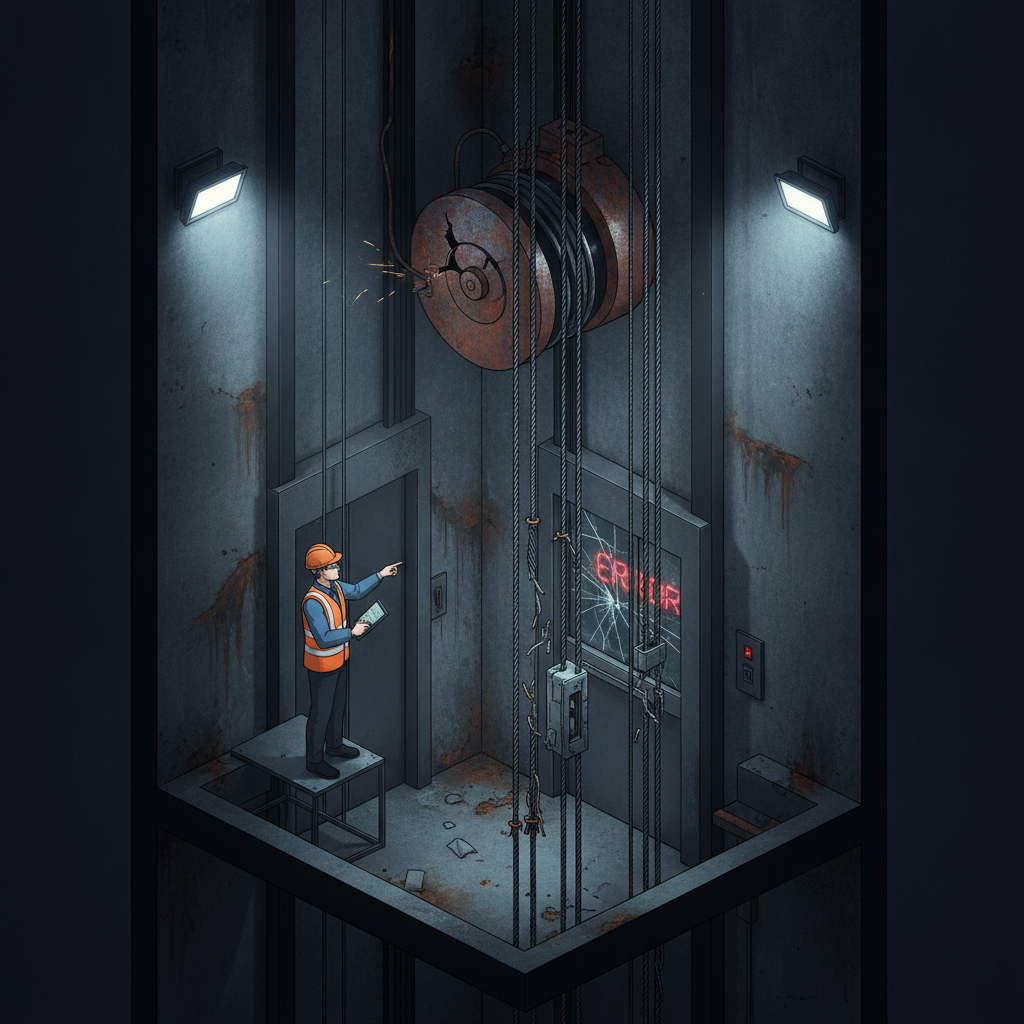
Safety Can’t Wait.
Book a free safety audit with Vertis Elevators and ensure your building meets every standard - protecting people and your reputation.
Leave a Comment



Comments (1)
June 11, 2026
Visitor
A well-explained guide covering essential safety standards and maintenance practices. It helped us better understand compliance requirements for commercial buildings.