

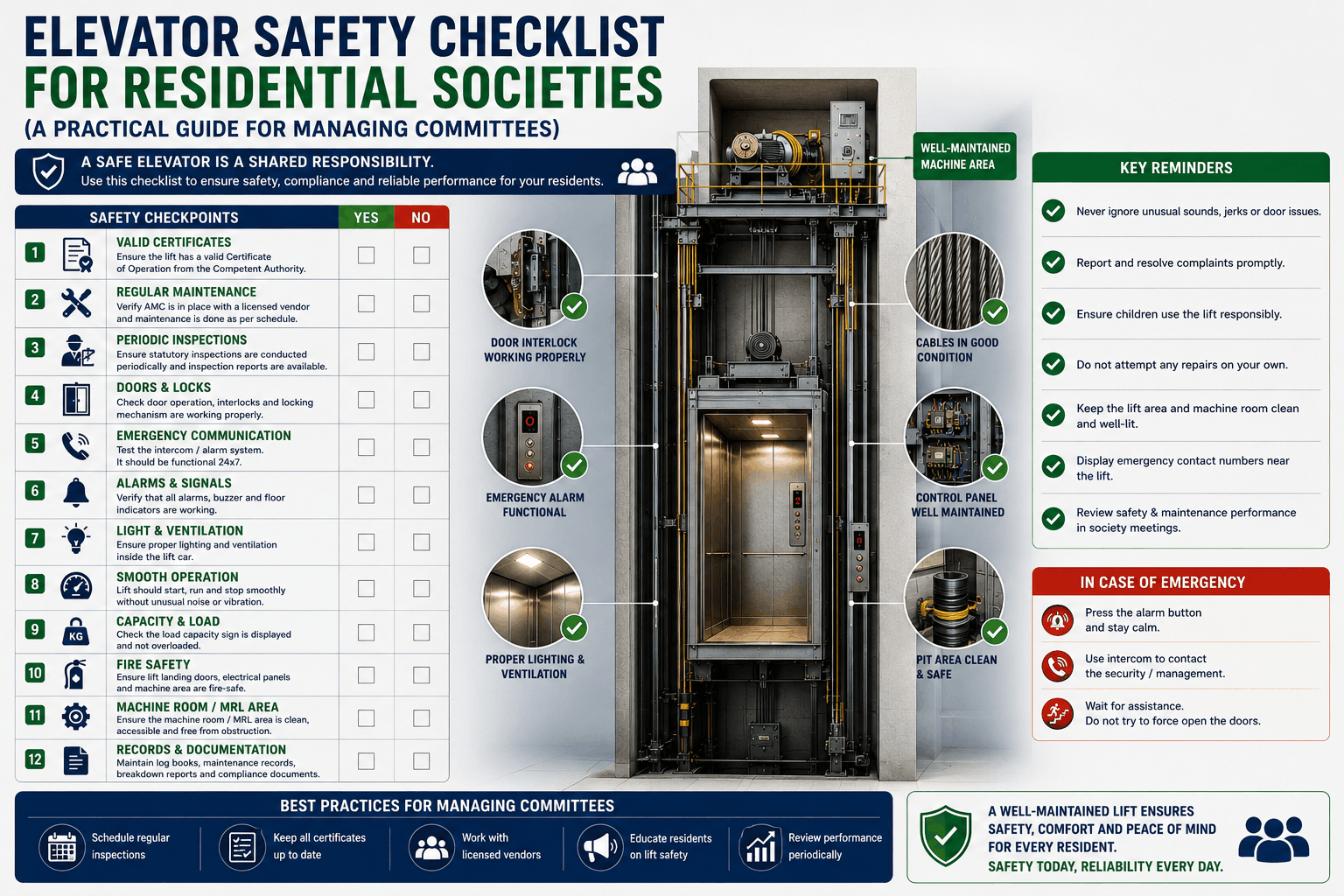
Elevator Safety Checklist for Residential Societies (A Practical Guide for Managing Committees)
In residential societies, elevators are among the most heavily used and least questioned systems. They operate silently every day, carrying children, senior citizens, and families — until one day they don’t.
For managing committee members, elevator safety is not just a technical matter. It is a shared responsibility, often handled without formal training or clear guidance.
This checklist is designed to help housing societies proactively ensure elevator safety, reduce compliance risks, and prevent emergencies.
Why Do Residential Societies Need a Dedicated Safety Checklist?
Unlike commercial buildings, societies often:
- Rely fully on AMC providers
- Rotate committee members every year
- Lack technical documentation continuity
- Address safety only after breakdowns
A structured checklist helps bridge this gap — without requiring engineering expertise.
SECTION 1: Legal & Compliance Essentials
Every society should verify the following:
- Valid Lift Inspection Certificate (not expired)
- Lift registered under the Bombay Lifts Act
- Inspection renewal schedule clearly noted
- Fire NOC alignment (if applicable)
- Display of inspection certificate near the lift
Operating an elevator without a valid certificate is a legal violation, even if the lift works perfectly.
Unsure whether your society’s lift certificate is current? A quick compliance review by Vertis Engineer can prevent inspection-day surprises.
SECTION 2: Daily-Use Safety Checks (Non-Technical)
Committee members or security staff should periodically observe:
- Smooth door opening and closing
- No jerks, unusual noises, or vibrations
- Accurate floor leveling
- Proper cabin lighting and ventilation
- Clear load capacity signage inside the car
These checks require no tools. Only attention.
SECTION 3: Emergency Systems Verification
Every society must ensure:
- Emergency alarm button is functional
- Audible bell or communication system works
- Emergency lighting activates during power failure
- Rescue instructions are clearly displayed
- Security or response team knows emergency procedures
Many societies discover non-functional alarms only during inspections or emergencies.
SECTION 4: Door Safety & Child Protection
Door-related issues are a leading safety concern in residential buildings.
Check for:
- Proper door alignment
- No forced manual operation
- Sensors responding correctly
- No gaps that could trap hands or objects
If children or senior citizens use the lift daily, door safety deserves priority attention.
SECTION 5: Maintenance & AMC Discipline
Ensure your AMC includes:
- Clearly defined scope of work
- Preventive maintenance schedule
- Response time commitments
- Breakdown reporting mechanism
- Proper maintenance logbook updates
Committee members should review logbooks periodically, not just during inspections.
SECTION 6: Electrical & Power Backup Readiness
Verify:
- Proper earthing and electrical safety
- Emergency power or DG integration
- Safe response during power failures
- No exposed wiring or panels
Frequent power issues can accelerate wear if systems are not protected.
SECTION 7: Age & Modernization Awareness
If your elevator is:
- 15+ years old
- Facing frequent breakdowns
- Using obsolete controllers
- Difficult to source spare parts
It may still function, but may not meet current safety expectations.
A modernization assessment today can prevent forced upgrades tomorrow.
SECTION 8: Inspection Preparedness
Before any government inspection:
- Update all documentation
- Test alarms and safety systems
- Ensure cleanliness of shaft and cabin
- Review previous inspection remarks
- Conduct a pre-inspection audit if needed
Prepared societies face fewer penalties and smoother renewals.
SECTION 9: Responsibility Clarity
Societies should clearly understand:
- The AMC maintains the lift
- The society owns the responsibility
- Compliance failures ultimately fall on the owner
Clear accountability prevents disputes during emergencies.
SECTION 10: Create a Safety Culture
The safest societies:
- Discuss elevator safety in AGMs
- Allocate preventive maintenance budgets
- Avoid delaying safety upgrades
- Treat elevators as critical infrastructure, not utilities
Final Thought
Elevator safety in residential societies is not about reacting to breakdowns — it is about preventing risks quietly and consistently.
A simple checklist, followed regularly, can protect lives, reduce stress for committee members, and ensure legal peace of mind.
Your elevator is more than equipment — it is a responsibility for every life that uses it each day. A small review today can prevent serious risks tomorrow.
Speak with Vertis Elevators for expert guidance, safety audits, or compliance support, because safety should never be left to chance.
Call: +91 9028 00 3111
WhatsApp Support Available
Email: support@vertiselevators.com
Related Post

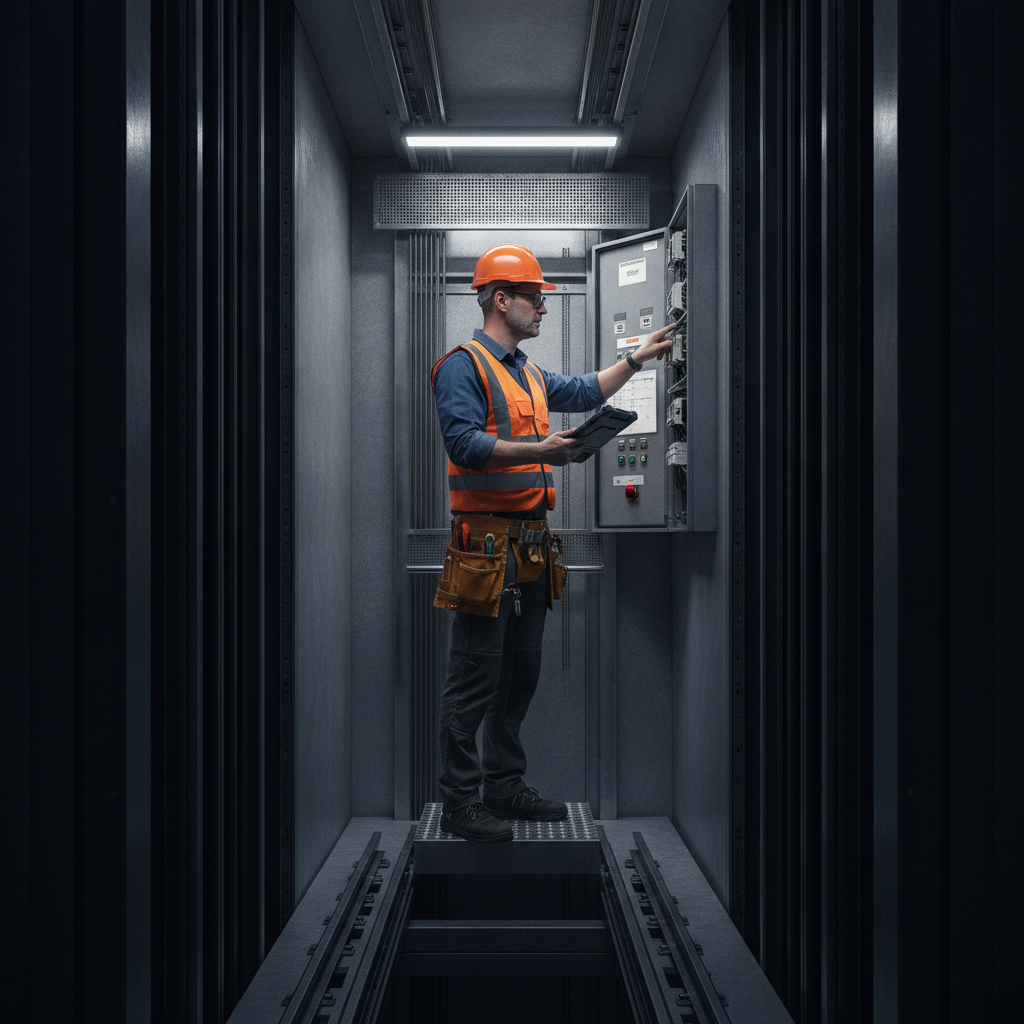
Safety Can’t Wait.
Book a free safety audit with Vertis Elevators and ensure your building meets every standard - protecting people and your reputation.
Leave a Comment



Comments (0)
No comments available.