

Elevator AMC Buyer’s Guide: What to Check Before Signing a Contract
Introduction: Why an AMC Is Not “Just Maintenance”
For most building owners, facility managers, and housing societies, an Elevator AMC (Annual Maintenance Contract) is treated like a routine formality, signed once a year, filed away, and forgotten.
That might be a costly mistake.
An elevator AMC is not merely about periodic servicing. It directly impacts passenger safety, operational uptime, compliance with regulations, long-term costs, and even legal liability.
This guide is written to help you make an informed, confident, and future-proof decision before signing an AMC; whether for a factory lift, a hospital elevator, a commercial complex, or a residential society.
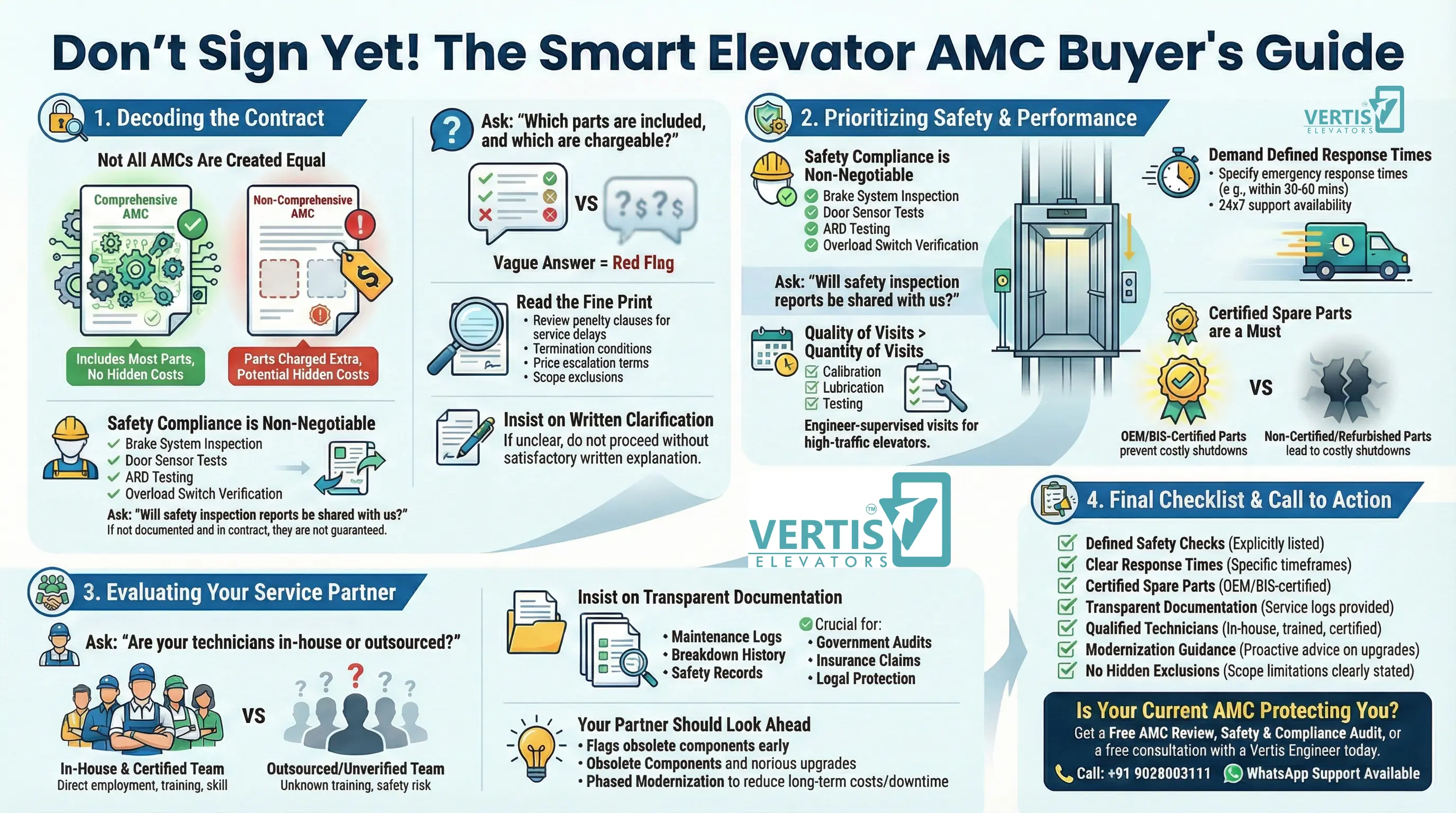
1. Understand the Type of AMC You Are Being Offered
Not all AMCs are equal, even if they sound similar.
Common AMC Types Explained
- Comprehensive AMC (CAMC)
Covers servicing, labour, and most spare parts. - Non-Comprehensive AMC
Covers only routine servicing and labour; spare parts are charged separately. - Preventive Maintenance Contract
Focused on inspections and adjustments, not breakdown coverage.
What to ask clearly to an AMC provider?:
“Which parts are included, and which are chargeable?”
If the answer is vague, that’s a red flag.
Good AMCs reduce surprises. Poor ones create them.
2. Safety Compliance: Non-Negotiable, Not Optional
Every elevator must comply with BIS (Indian Standards) and relevant safety norms. Yet many AMCs quietly skip critical safety checks.
Your AMC must explicitly include:
- Brake system inspection
- Door safety sensors & interlocks testing
- Emergency alarm & intercom checks
- Auto Rescue Device (ARD) testing
- Overload and limit switch verification
Ask this directly:
“Will safety inspections be documented and shared with us?”
If safety is not written into the AMC, it is not guaranteed.
3. Response Time: What Happens When the Elevator Stops?
In hospitals, malls, factories, and even housing societies, downtime costs money, trust, and sometimes lives.
Under AMC terms, look for:
- Defined emergency response time (example: within 30–60 minutes)
- Clear escalation mechanism
- 24x7 support availability (not just business hours)
Avoid vague promises like “quick service” without timelines.
An AMC without response commitments is a gamble.
4. Frequency & Depth of Maintenance Visits
More visits do not always mean better maintenance. Quality and scope matter more than numbers.
Ensure the AMC specifies:
- Number of scheduled visits per month/year
- Checklist of tasks performed per visit
- Calibration, lubrication, alignment, and testing scope
Ask whether visits are:
- Technician-only
- Engineer-supervised (recommended for high-traffic elevators)
5. Spare Parts: Quality Matters More Than Price
Low AMC pricing is often achieved by:
- Using non-certified or refurbished parts
- Delaying part replacement until failure
What to verify?
- Are parts OEM-approved or BIS-certified?
- Will worn components be proactively replaced?
- Are modernization recommendations included?
A cheaper part today can mean a costly shutdown tomorrow.
6. Documentation & Transparency
A professional AMC provider treats documentation as seriously as maintenance.
You should receive:
- Maintenance logs after every visit
- Breakdown and repair history
- Safety inspection records
- Compliance support during audits
These records protect you during:
- Government inspections
- Insurance claims
- Legal disputes
7. Modernization Advisory: Does Your AMC Look Ahead?
Elevators age with time and technology evolves.
A good AMC partner does not just maintain; they advise.
Look for AMC providers who:
- Flag obsolete or unsafe components early
- Suggest phased modernization (not forced upgrades)
- Help reduce energy consumption and downtime
This is where long-term cost savings are created.
8. Who Is Actually Maintaining Your Elevator?
Many AMCs are sold by companies but executed by ‘under trained’ subcontractors.
Ask openly:
- Are technicians ‘company employed’ or outsourced?
- What certifications and training do they have?
- Is there engineer level supervision?
Your elevator is only as safe as the person servicing it.
9. Contract Clauses You Must Read Carefully
Before signing, review:
- Penalty clauses for service delays
- Exit or termination conditions
- Price escalation terms
- Scope exclusions (often hidden in fine print)
If something is unclear, insist on clarification in writing.
10. Final Checklist Before You Sign
Before committing to any AMC, confirm that it includes:
- Defined safety checks
- Clear response timelines
- Certified spare parts
- Transparent documentation
- Qualified technicians
- Modernization guidance
- No hidden exclusions
If even one of these is missing, reconsider.
Key Takeaway
An Elevator AMC is not an expense; it is an insurance policy for safety, reliability, and peace of mind.
Choosing the right AMC partner today can prevent accidents, reduce long-term costs, and ensure uninterrupted vertical mobility for years to come.
Call to Action
Not sure if your current AMC is truly protecting you?
- Request a Free AMC Review by Vertis Engineers
- Get a Safety & Compliance Audit
- Have a free consultation with a Vertis Engineer Today
Call: +91 9028 zero zero 3111 | WhatsApp Support Available
Email: support@vertiselevators.com
Related Post
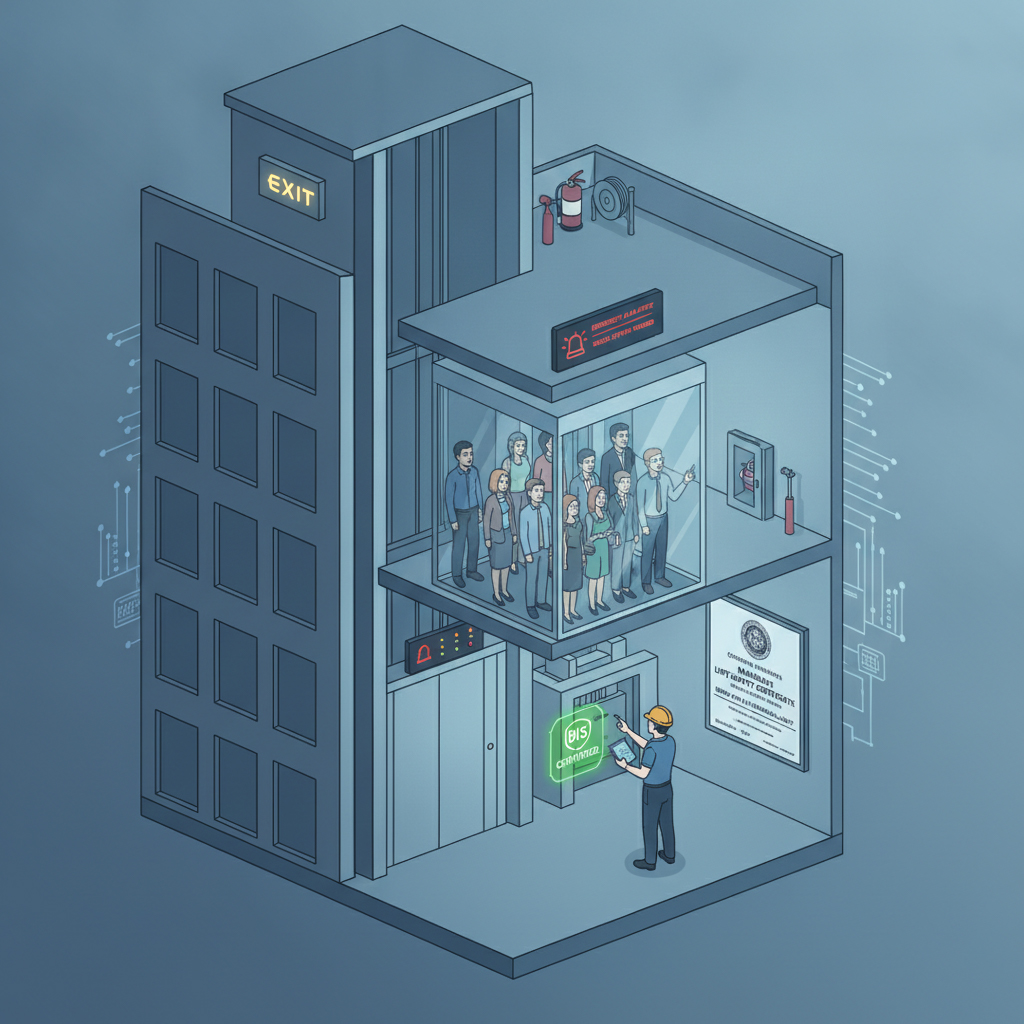
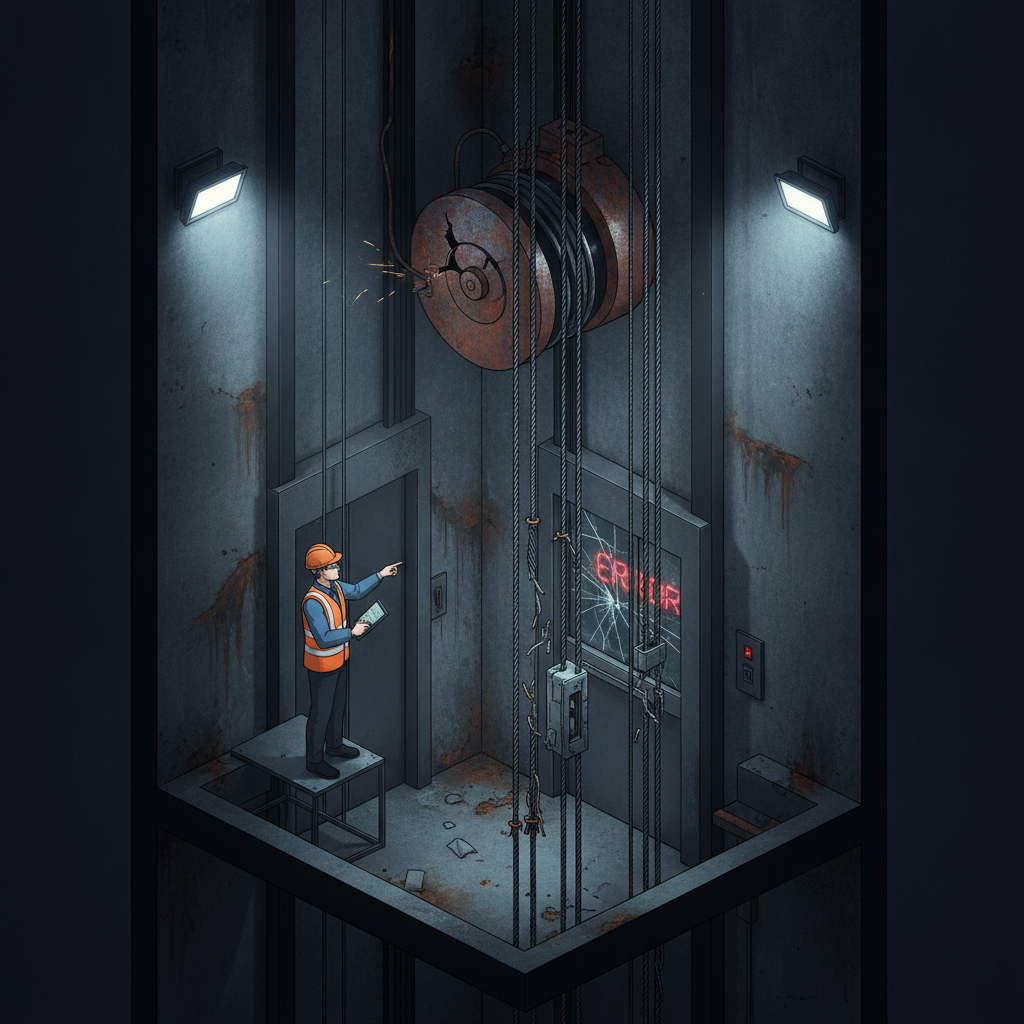
Safety Can’t Wait.
Book a free safety audit with Vertis Elevators and ensure your building meets every standard - protecting people and your reputation.
Leave a Comment



Comments (0)
No comments available.