

What Happens During an Elevator Safety Audit? A Step-by-Step Guide
To download Free Elevator Safety Audit Checklist, click here.
For many building owners and facility managers, the term “elevator safety audit” creates anxiety.
Questions arise immediately:
- Will the elevator be shut down?
- Will expensive upgrades be forced?
- Is this different from routine maintenance?
- Who is responsible if something fails?
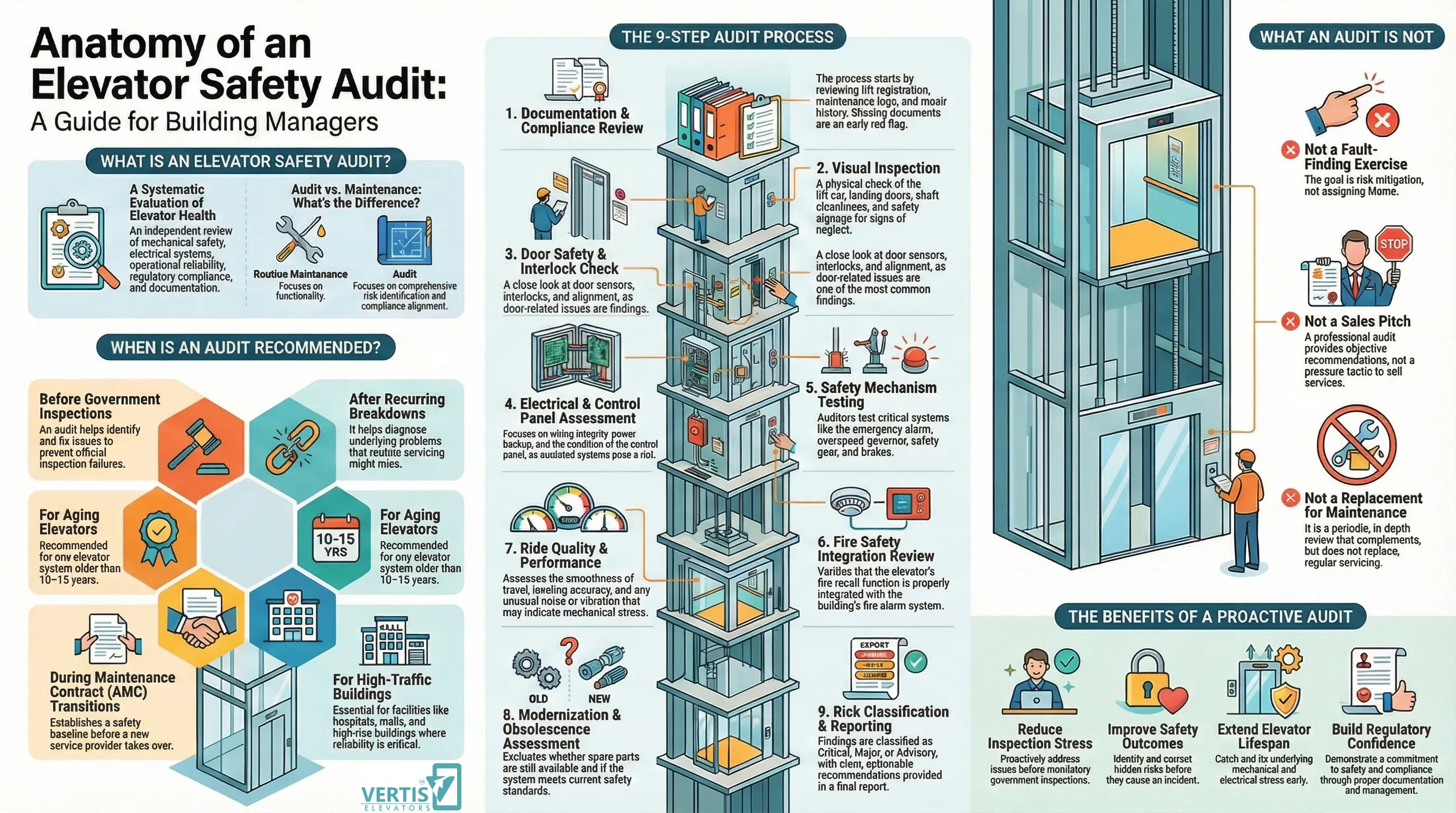
A safety audit is not meant to penalize; it is meant to identify risks before they become incidents. This guide explains exactly what happens during an elevator safety audit, step by step, so you can approach it with clarity and confidence.
What Is an Elevator Safety Audit?
An elevator safety audit is a systematic, independent evaluation of an elevator’s:
- Mechanical safety
- Electrical systems
- Operational reliability
- Regulatory compliance
- Documentation and records
Unlike routine servicing, an audit focuses on risk identification and compliance alignment, not just functionality.
When Is a Safety Audit Typically Required?
Audits are commonly conducted:
- Before government inspections
- After recurring breakdowns
- Following major repairs or modernization
- During AMC transitions
- For hospitals, malls, and high-traffic buildings
- For elevators older than 10–15 years
If your society hasn’t reviewed elevator safety in years, an audit can prevent sudden inspection failures.
Step 1: Documentation & Compliance Review
The audit begins with paperwork because compliance starts on paper.
Auditors typically review:
- Lift registration and inspection certificates
- Maintenance logbooks
- AMC contracts
- Breakdown and repair history
- Fire NOC alignment (where applicable)
Missing or outdated documents are often the first red flags, even if the elevator operates normally.
Step 2: Visual Inspection of Shaft, Car & Landing Areas
Next comes a physical inspection of:
- Lift car condition
- Landing doors and frames
- Shaft cleanliness and access
- Safety signage and notices
- Lighting and ventilation
In patient-facing environments, visual safety and clarity are as critical as mechanical reliability.
Step 3: Door Safety & Interlocking Systems Check
Door systems are among the most scrutinized components.
Auditors check:
- Door interlocks
- Sensors and light curtains
- Door alignment and response time
- Manual operation and emergency release
Door-related issues are one of the most common audit findings due to wear and misuse.
Step 4: Electrical Systems & Control Panel Assessment
This step focuses on:
- Control panel condition
- Wiring integrity
- Earthing and insulation
- Power backup or emergency operation
- Controller technology (modern vs obsolete)
Outdated electrical systems may still work, but fail modern safety expectations.
High-load usage accelerates electrical wear. Periodic audits help avoid unplanned downtime.
Step 5: Safety Mechanisms & Emergency Systems Testing
Auditors test critical safety systems, including:
- Emergency alarm and communication
- Overspeed governor
- Safety gear
- Brake operation
- Emergency lighting
They also verify testing records, not just the presence of equipment.
Step 6: Fire Safety Integration Review
For buildings requiring fire compliance, auditors check:
- Fire recall functionality
- Integration with fire alarm systems
- Manual override operations
- Fire-rated components
Fire safety failures are treated seriously, especially in hospitals, malls, and high-rises.
Fire compliance issues can affect occupancy approvals, early audits reduce last-minute corrections.
Step 7: Ride Quality & Operational Performance
Auditors assess:
- Smoothness of travel
- Leveling accuracy
- Noise and vibration
- Response consistency
Poor ride quality often indicates underlying mechanical or electrical stress.
Step 8: Modernization & Obsolescence Assessment
Audits also evaluate whether:
- Spare parts are still supported
- Systems meet current BIS standards
- Safety upgrades are technically feasible
Older elevators may pass short-term tests but fail long-term safety alignment.
Step 9: Risk Classification & Audit Report
At the end of the audit, findings are typically classified as:
- Critical (Immediate action required)
- Major (Safety-impacting)
- Advisory (Preventive improvements)
A good audit report explains:
- What the issue is
- Why it matters
- What actions are recommended
- Whether modernization is required
What an Audit Is NOT
A safety audit is:
- Not a fault-finding exercise
- Not a sales pitch (when done professionally)
- Not a replacement for maintenance
It is a risk management tool.
How Vertis Elevators Conducts Safety Audits
At Vertis Elevators, audits are conducted with a compliance-first, non-alarmist approach.
Our audits focus on:
- BIS and Maharashtra regulatory alignment
- Practical risk prioritization
- Clear documentation support
- Actionable recommendations
- Future-proofing through modernization planning
We help clients understand what truly needs attention, and what doesn’t.
A well-timed safety audit costs far less than emergency repairs or forced shutdowns.
Final Thought
Elevator safety audits should not be feared; they should be planned.
When done proactively, audits:
- Reduce inspection stress
- Improve safety outcomes
- Extend elevator lifespan
- Build regulatory confidence
The safest elevators are not the newest, they are the most responsibly managed.
Call: +91 9028 00 3111
WhatsApp Support Available
Email: support@vertiselevators.com
Related Post

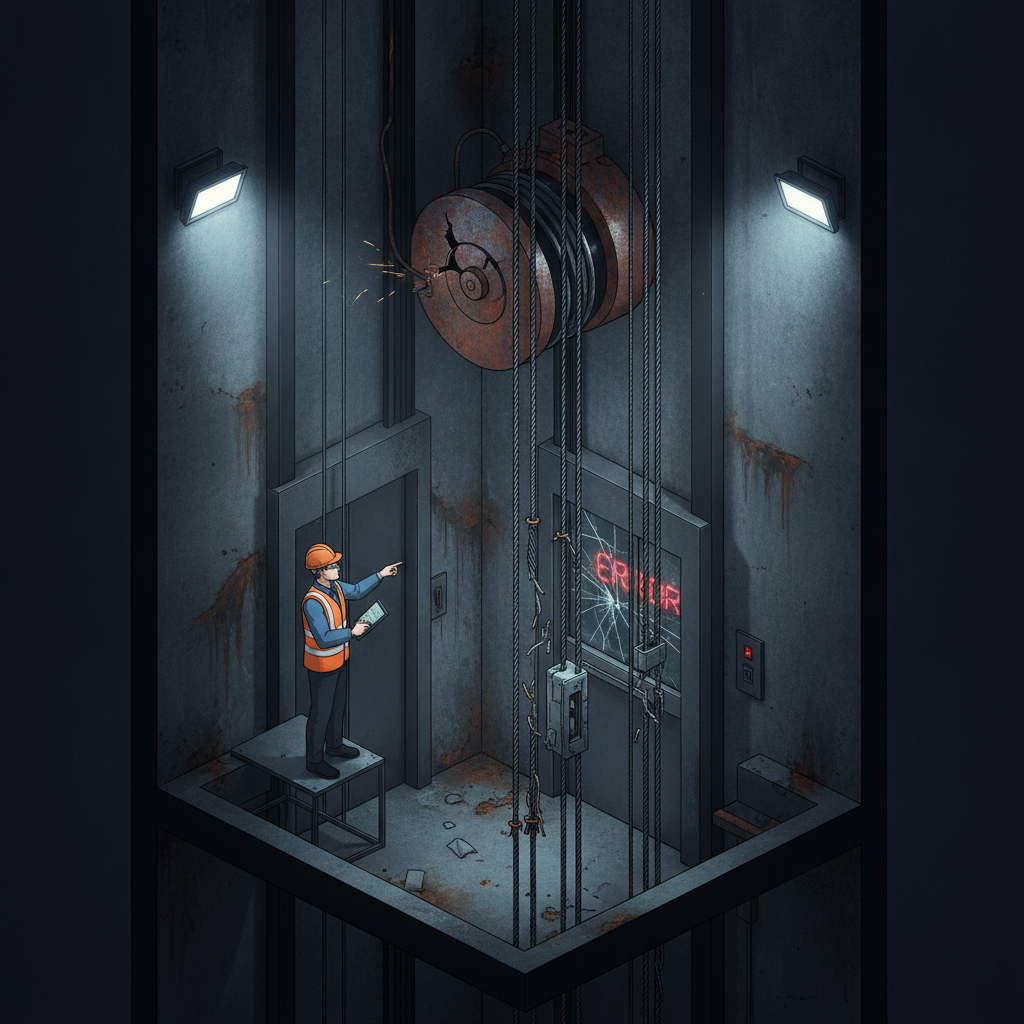
Safety Can’t Wait.
Book a free safety audit with Vertis Elevators and ensure your building meets every standard - protecting people and your reputation.
Leave a Comment



Comments (0)
No comments available.